Pelvic Health
basic level
A practical course for physiotherapists and professionals working in pelvic floor rehabilitation, led by Martina Ježková, an instructor at the Prague School of Rehabilitation. The programme combines functional assessment, breathing and postural stabilisation analysis with manual techniques and exercises based on Dynamic Neuromuscular Stabilization (DNS). The course is also open to physiotherapists and strength and conditioning coaches with no previous DNS training, as well as graduates of DNS Clinical A.
About course
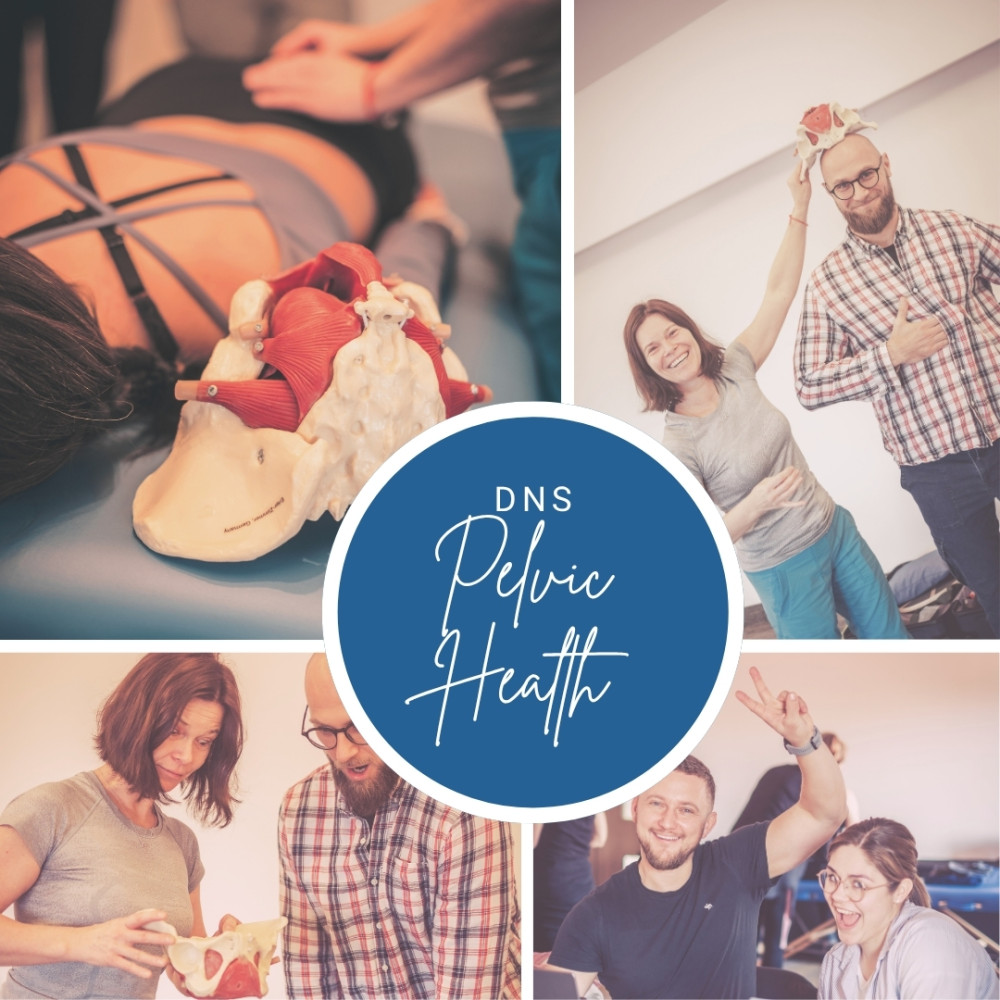
A patient reports urinary incontinence, pelvic pain or difficulties related to pelvic floor muscle function. Assessing muscle strength alone does not always provide sufficient information. The ability to relax, coordination with breathing and the way the entire body organises movement may also be important.
How can you assess these relationships and use the findings to plan treatment?
DNS Pelvic Health is a course based on the principles of developmental kinesiology and the neurophysiology of motor control, as developed by Professor Pavel Kolář and the Prague School of Rehabilitation.
During the course, you will learn to analyse pelvic floor function in relation to the diaphragm, intra-abdominal pressure control, trunk stabilisation, and hip and lower-limb function.
You will explore DNS functional tests and learn how to use assessment findings to select appropriate exercises and therapeutic techniques.
The programme also covers soft tissue and scar assessment and treatment, along with selected manual techniques for pelvic floor muscle activation and relaxation. You will learn to use DNS developmental positions and integrate pelvic floor function into patients' everyday activities.
Led by Martina Ježková, the course combines lectures, demonstrations and extensive hands-on practice. Particular emphasis is placed on accurate assessment, appropriate intervention selection and individualised treatment planning.
The aim of the course is to develop functional pelvic floor assessment skills and the ability to integrate manual therapy, breathing techniques and movement-based interventions in the rehabilitation of patients with pelvic floor dysfunction.
Modules
- Module
Module
Course objectives - DNS approach to:
Basic principles of developmental kinesiology with an emphasis on development during the first year of life
The relationship between development during the first year of life and pathology of the locomotor system in adulthood.
Assessment of the integrated stabilizing system of the spine utilizing dynamic functional tests
Corrective exercises based on the DNS functional tests and developmental positions
Functional relationship between diaphragm and pelvic floor
Relaxation and activation of pelvic floor muscles
Pelvic floor integration in global movement patterns
Functional sterility
Urinary stress incontinence
Dysmenorrhea
Non specific pelvic pain
Constipation
Pregnancy - importance of diaphragm and pelvic floor
Soft tissue & visceral techniques, “active scar” treatment using barrier phenomenon according to Lewit
DNS based mobilization for lumbar spine and Lewit’s mobilization and relaxation techniques + self treatment techniques for pelvic region